|
Text to Speech Player
Getting your Trinity Audio player ready…
|
Research that pairs mixed methods research and grounded theory methods in a reflexive way is a growing presence in the literature and authored by investigators from all over the world.
Publishers of academic textbooks and handbooks increasingly demand that authors be conscientious about shifting from a US-centric approach to one that is global in the sense that it recognizes research produced by researchers from all over the world.
An earlier post from a webpage I’ve developed that is devoted to MM-GT highlighted its appeal across a broad range of disciplines. Results from an initial search in SCOPUS in April 2026 with a selective set of search terms that yielded 236 examples revealed that about 28% were published from the nursing, medicine, and health sciences, with an additional 45% from social sciences and psychology. The search was selective in that it narrowed attention only to articles where “mixed methods research” or variants appeared in the title and “grounded theory” or variants appeared in the title, abstract, or as a keyword. It’s been my experience that the stipulation that articles with “mixed methods research” research in the title are more reflexive about the method than those where the words are absent. Search results expand to 1577 when the stipulation that variants of the words “mixed methods research” appear in the title.
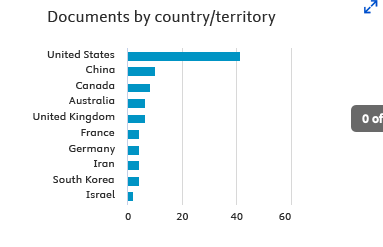
Another way to draw attention to how broadly MM-GT has been adopted in practice is to take a look at the geographic distribution of the affiliation of its authors from the initial SCOPUS search from April 2026. The bar graph underscores how useful this complex pairing has been found to be in practice.

Being a Global Consumer
An exposure to a diversity of viewpoints is one product of investing time to become familiar with empirical and methodological articles about mixed methods research produced by authors outside the US. Without this, it is easy to be soothed by the idea that there is one way to do mixed methods research.
The series of edited Handbooks about Mixed Methods that first started to appear in 2003, is the best way to get a sense of the breadth and diversity of viewpoints about mixed methods research. The Oxford Handbook of Multimethod and Mixed Methods Research Inquiry (2015), edited by Sharlene Hesse-Biber and R. Burke Johnson, awards the most attention to qualitatively oriented mixed methods research.